Services · Cloud Engineering

Cloud Engineering

Cloud work only matters if it holds up under real load, at 3am, without you finding out from a customer. We design cloud-native architectures, run migrations off legacy infrastructure without a big-bang cutover, and operate the DevOps practices that keep the whole thing reliable after launch — the same production discipline behind everything else we build, applied to the platform it all runs on.

Build and run on
  • AWS
  • Azure
  • Google Cloud

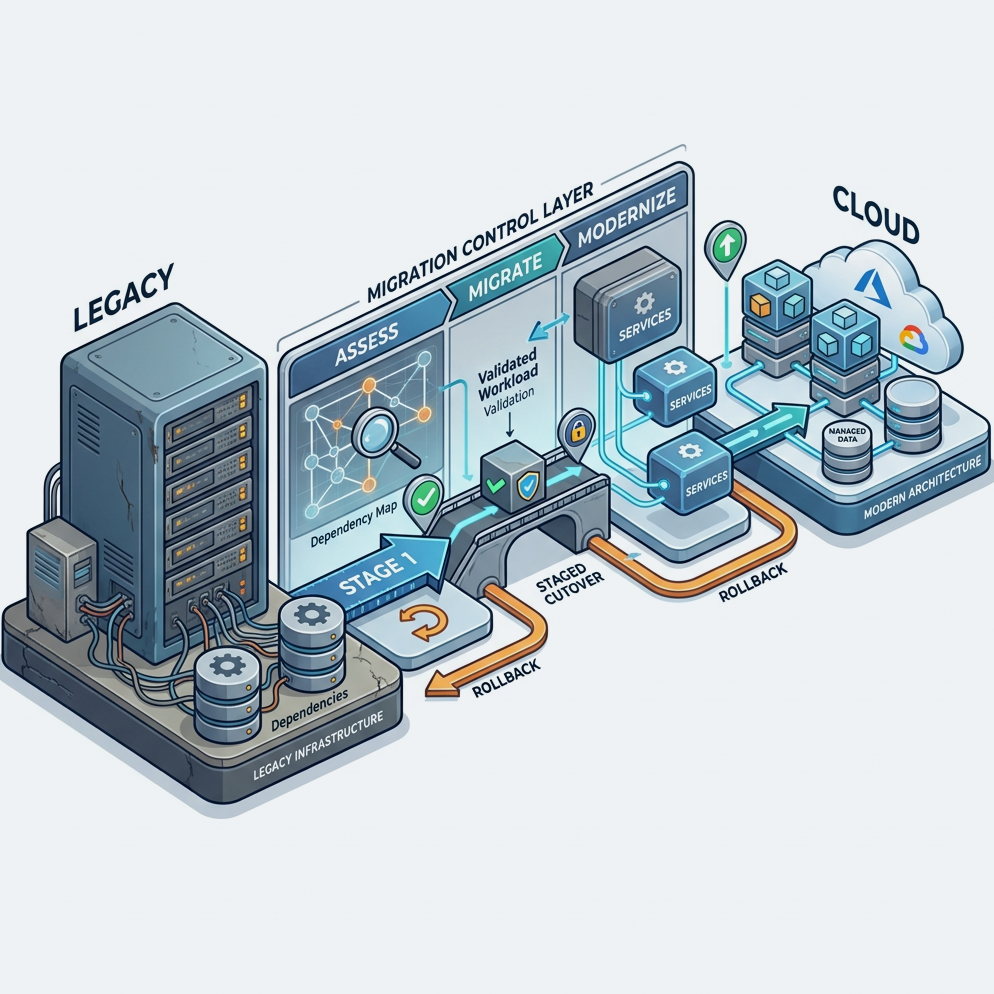
How we move off legacy infrastructure

No big-bang cutover — the same three moves regardless of what you're migrating off.

1

Assess

Map what's actually in scope — dependencies, data, and the parts of the estate a lift-and-shift would just relocate, not fix.

2

Migrate in stages

Move in stages you can validate, each with its own rollback path — never a single one-way cutover.

3

Modernize

Break monoliths into services incrementally as you go, instead of a separate, riskier rewrite project later.

Cloud Native

Architectures designed for the cloud from the start — containerized services, managed data stores, and infrastructure defined as code so environments are reproducible instead of hand-configured and undocumented.

  • Container orchestration (Kubernetes, ECS) and service architecture
  • Infrastructure as code — every environment reproducible from a repo, not a runbook
  • Managed data stores and event-driven architectures where they fit the workload
  • Multi-cloud design across AWS, Azure and GCP, not locked to one vendor's assumptions
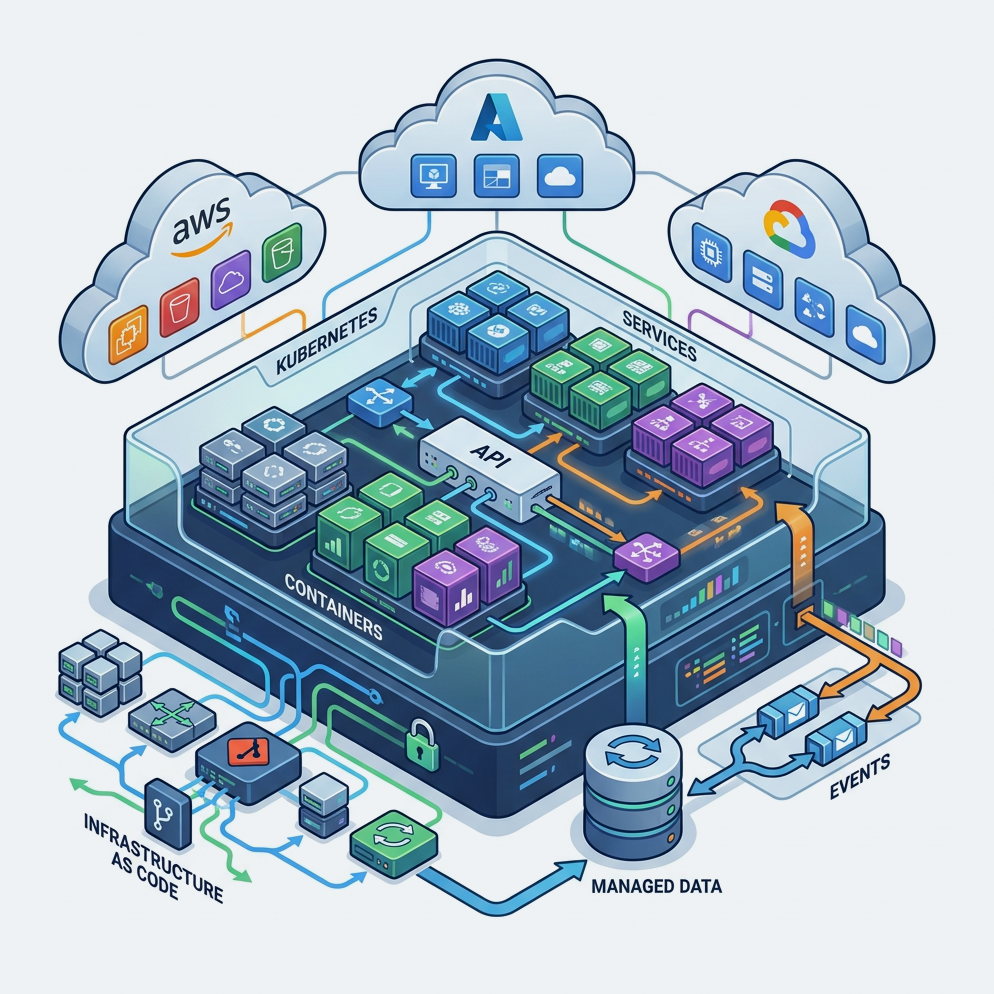
Isometric diagram of a cloud-native platform: containerised services and Kubernetes workloads on a managed platform, fed by AWS, Azure and Google Cloud, with infrastructure as code, managed data and an event stream wired around it

Cloud Migration & Modernization

The three-move pattern above holds across whatever you're migrating off — mainframes, on-prem VMs, a decade of accumulated technical debt. What changes case to case is the assessment, not the discipline.

  • Legacy infrastructure assessment and staged migration planning
  • Lift-and-shift where speed matters, re-architecture where it's actually worth it
  • Modernizing monoliths into services incrementally, not a risky rewrite
  • Cutover plans with rollback paths, not a one-way door
Isometric diagram of a staged cloud migration: a legacy server estate on the left, a migration control layer that assesses dependencies, migrates a validated workload and modernises it, each stage with a rollback path, landing on a modern cloud architecture

DevOps

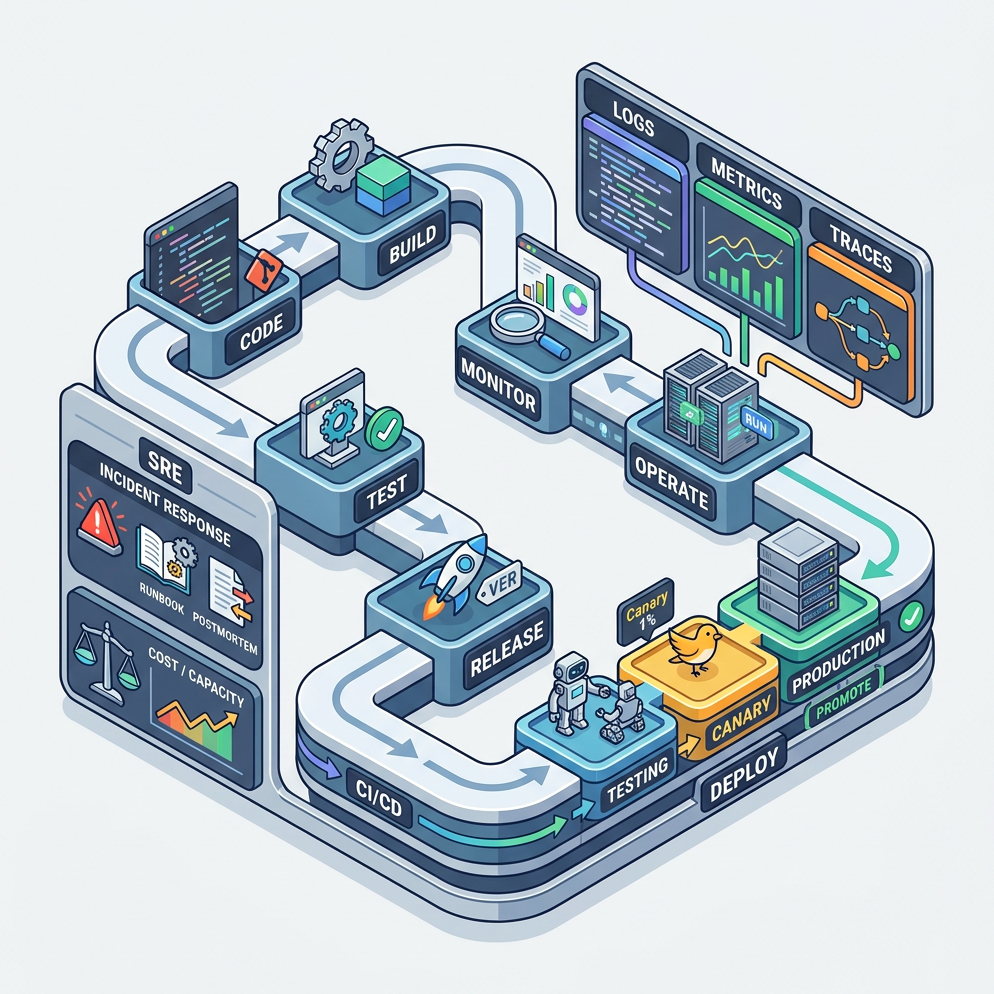
The practices that keep a system reliable after launch, not just at launch: CI/CD pipelines, observability, and SRE discipline so incidents get caught by a dashboard before they get caught by a customer.

  • CI/CD pipeline design and automation
  • Observability — logging, metrics and tracing wired in from the start, not bolted on after an outage
  • SRE practices: on-call runbooks, incident response, and postmortems that actually change something
  • Cost and capacity management as an ongoing practice, not a quarterly fire drill
Isometric diagram of the DevOps loop: code, build, test, release and deploy through testing, canary and production, then operate and monitor with logs, metrics and traces, ringed by CI/CD and SRE practices — incident response, runbooks, postmortems and cost and capacity

Let's scope your migration

We'll assess what's in scope and what it takes to move it without a weekend of downtime.